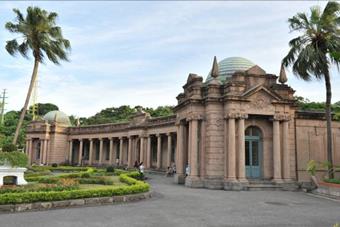
日治時期所興建的新式建築,建築的形式與風格象徵著地位與身分。該建築受日本明治維新後的建築影響,自來水博物館建築上多有和洋混合的建築細部或折衷形式,舉例如下: - 圓頂、圓拱、古典柱式:受到古希臘與古羅馬的建築影響,而文藝復興之後,以及隨後的新古典主義建築,為影響本建築最大的建築形式;而圓頂在羅馬人的文化中用以象徵宇宙,亦常出現於羅馬帝國之後的拜占庭帝國建築。
- 拱窗:以半圓拱窗搭配拱圈。
- 屋頂:半圓銅板瓦造型屋頂,師法拜占庭與古典主義兩種風格。
- 柱式:愛歐尼克式柱式,羊角捲窩裝飾,為古希臘的三種柱式之一;柱頭形式來自於自然界貝殼或羊角。
- 窗戶:圓拱窗與方形窗是文藝復興以後的建築代表性特色。
- 拱門:飾以淺浮雕的拱門。
- 排氣花臺:放置於自來水博物館建築本體外的排氣設施。
據考證當時留存的「臺北水道水源地唧筒室新建築圖」記載,推斷設計師應為「森山松之助」。
The new-style architecture adopted during the period when Taiwan was under Japanese rule often presented one's status and identity through a building's form and style. This building had influences from Japan's Meiji Restoration, in a hybrid of Japanese and European architectural elements, such as: - Dome, Round Arches, and Classical Orders: Influenced not only by the architecture of classical Greece and Rome, but also that of the Renaissance and by Neoclassicism, the dome here was a symbol of the universe in Roman culture, and was an element also frequently used in the Byzantine Empire.
- Arched Windows: Semicircular arched windows with arched rings.
- Rooftop: Copper tiles cover the rooftop in imitation of Byzantine and Classical architecture.
- Orders: The Ionic orders, decorated with volutes, is one of three types of order popular during the ancient Greek period; the shape of the capitals imitates shells or goat horns.
- Windows: The circular arched windows and square windows are distinguishing features of post- Renaissance architecture.
- Arches: Decorated with low reliefs (also known as "bas-reliefs").
- Ventilating Flower Terrace: Ventilation facilities are placed outside the museum building.
Based on the "New Architectural Drawing of Taipei Water Source Site Pumping Room" documentation left from the period, the architect is believed to be Mr. Matsunosuke Moriyama.